
How Government Offices Can Serve More People Without Delays. Government offices provide essential services such as ID processing, permits, licensing, registrations, and …
Why Busy Ticketing Offices Should Use Smart Queue Systems?
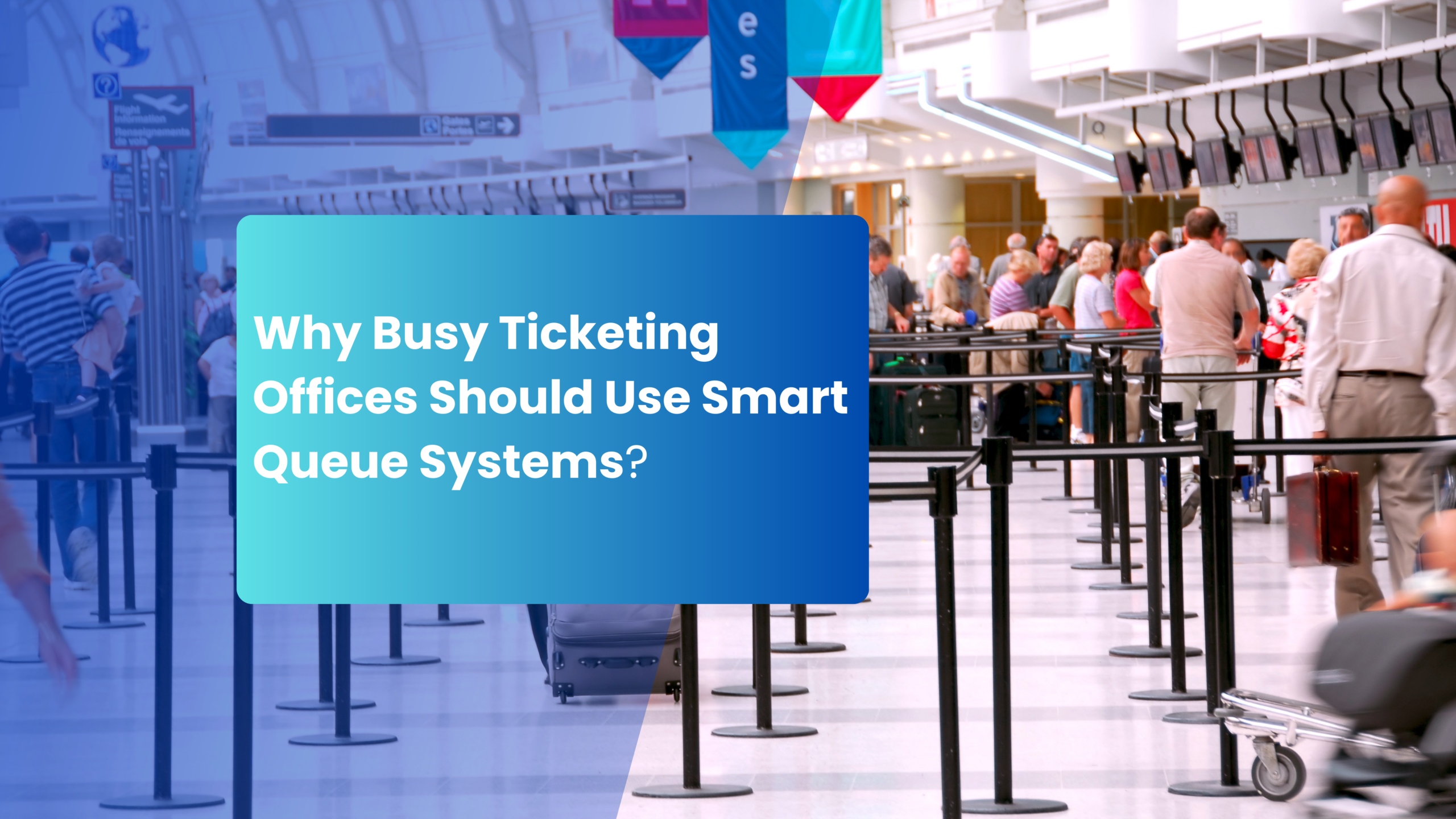
Ticketing offices handle a large number of customers who need assistance with purchasing tickets, making reservations, asking about schedules, or processing payments. These offices are commonly found in transportation hubs such as bus terminals, ferry ports, train stations, and travel agencies. During peak hours or travel seasons, customer traffic can increase significantly, leading to long lines and crowded waiting areas.
Smart queue systems help ticketing offices manage customer flow more efficiently while improving the overall service experience.
Replacing Unstructured Crowds with an Organized System.
Instead of customers lining up randomly or clustering around service counters, smart queue systems introduce a controlled process. Each customer is given a queue number, ensuring that service follows a clear and fair order. This eliminates confusion and creates a more professional service environment.
Keeping Service Counters Continuously Active.
In a busy ticketing office, delays often happen when counters are not used efficiently. Smart queue systems automatically assign the next customer to any available agent, ensuring that no counter remains idle for long. This helps maximize productivity and keeps the service flow steady.
Matching Customers with the Right Service.
Ticketing concerns can vary—from simple ticket purchases to more complex rebooking or refund requests. Instead of placing all customers in a single line, smart queue systems can sort them based on their needs. This allows each customer to be directed to the appropriate staff member, reducing processing time and improving service accuracy.
Creating a More Relaxed Waiting Experience.
Rather than standing in long lines, customers can wait in designated seating areas after receiving their queue number. They are notified through display screens or announcements when it is their turn. This approach makes waiting less stressful, especially for travelers who may already be dealing with tight schedules.
Reducing Pressure on Staff.
Without a proper system, staff members may need to manage both customer concerns and the crowd itself. This can slow down service and increase stress levels. Smart queue systems handle the flow of customers automatically, allowing employees to focus entirely on assisting travelers and completing transactions efficiently.
Staying Efficient During High-Demand Periods.
Ticketing offices often face sudden increases in customer volume during holidays, weekends, or special travel events. Smart queue systems help maintain order during these busy periods by controlling how customers are served. This ensures that operations remain smooth even when demand is high.
Benefits of Smart Queue Systems for Ticketing Offices:
Implementing smart queue technology can provide several key advantages:
Faster customer service and reduced delays
Better use of available service counters
Improved organization of different ticketing requests
More comfortable waiting experience for customers
Reduced stress for staff members
Higher overall customer satisfaction
Conclusion
Smart queue systems provide a practical solution for managing large volumes of customers in ticketing offices. By introducing a more organized and efficient service process, these systems help reduce waiting times, improve staff performance, and enhance the overall customer experience.
Adopting smart queue technology allows ticketing offices to handle busy periods with ease while delivering faster and more reliable service to travelers.
Related Articles

Fixing Overcrowded Dental Clinics with Smart Queue Technology. Dental clinics often experience a steady flow of patients throughout the day, from routine …

Why Telecommunications Service Centers Need Queue Management Systems. Telecommunications service centers assist customers with a wide range of needs, including SIM registration, …