
How Government Offices Can Serve More People Without Delays. Government offices provide essential services such as ID processing, permits, licensing, registrations, and …
What Are the Benefits of a Queue Management System for Hospitals?
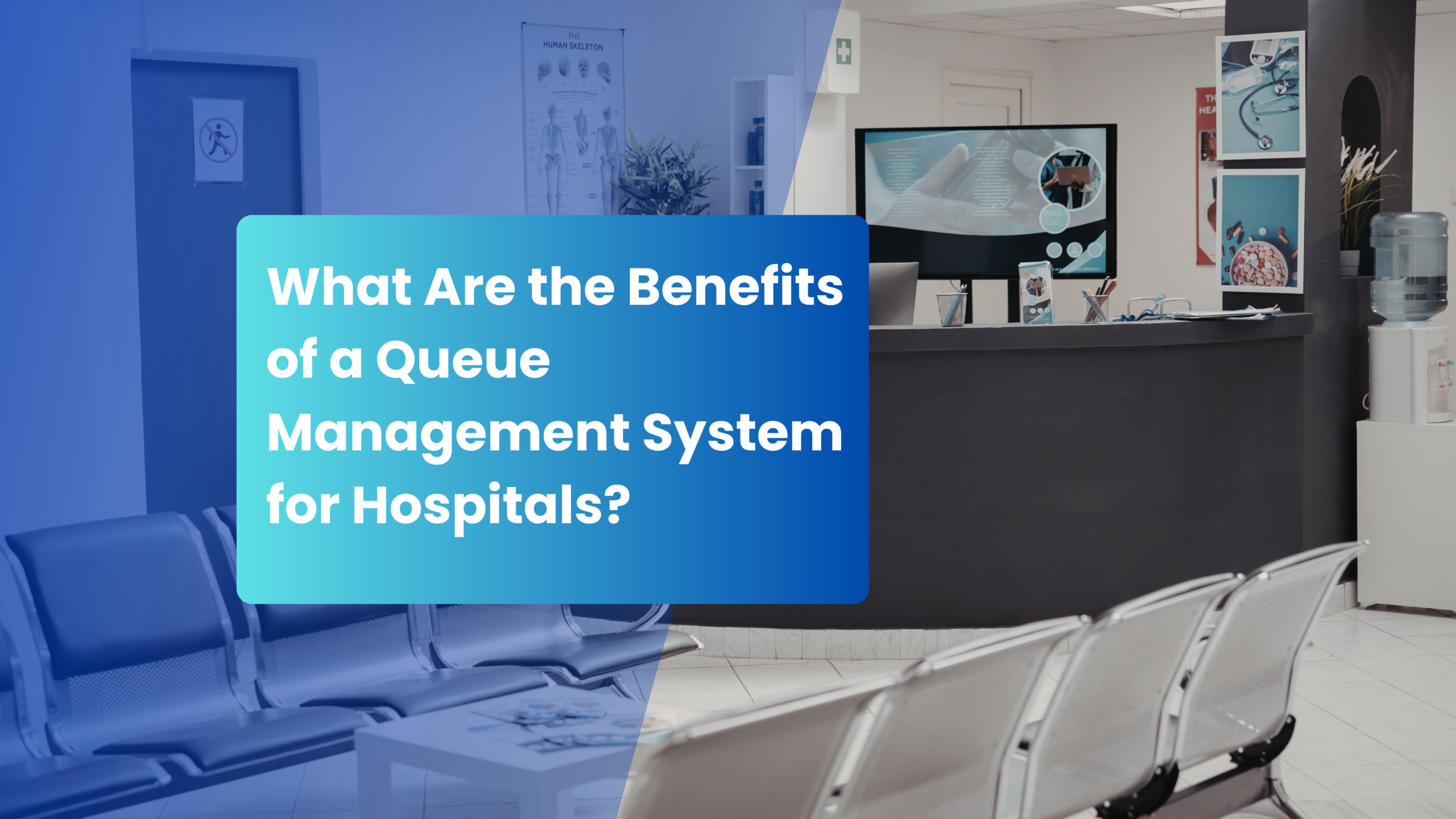
Hospitals operate in high-pressure environments where time directly impacts patient satisfaction and, in some cases, patient outcomes. Managing walk-ins, scheduled appointments, emergency cases, laboratory visits, pharmacy pickups, and billing queues can quickly become overwhelming without structure.
Leading healthcare institutions such as Mayo Clinic, Cleveland Clinic, and St. Luke’s Medical Center utilize advanced patient flow systems to maintain operational efficiency. A Queue Management System (QMS) plays a major role in achieving this.
1. Reduced Patient Waiting Time.
A QMS organizes patient flow by:
Issuing digital queue numbers
Categorizing services (consultation, lab, pharmacy, billing)
Displaying real-time updates
Patients move systematically instead of forming crowded physical lines.
Benefit: Shorter wait times and smoother service flow.
2. Improved Patient Experience.
Waiting without information increases anxiety—especially in healthcare settings. A queue system provides:
Estimated waiting times
Clear service direction
Transparent prioritization
Benefit: Patients feel informed, respected, and less stressed.
3. Better Triage and Priority Handling.
Hospitals must prioritize urgent cases. A QMS can:
Flag emergency patients
Assign priority levels
Separate critical from non-urgent cases
Benefit: Faster care for high-risk patients without disrupting overall operations.
4. Increased Staff Productivity.
Without proper queue coordination:
Staff may become overloaded
Work distribution becomes uneven
Bottlenecks form in specific departments
A QMS balances patient assignments and tracks service time.
Benefit: Optimized workload and reduced staff burnout.
5. Real-Time Monitoring and Operational Control.
Hospital administrators can monitor:
Current patient volume
Department congestion
Average service duration
Peak hours
Benefit: Immediate decision-making to prevent overcrowding.
6. Enhanced Data Collection and Reporting.
Queue systems generate valuable operational data such as:
Patient flow patterns
Waiting time trends
Department efficiency
Benefit: Data-driven improvements in staffing and workflow planning.
7. Reduced Overcrowding and Improved Safety.
Crowded waiting areas can:
Increase stress
Create confusion
Raise infection risks
A structured queue system organizes patient movement and reduces unnecessary clustering.
Benefit: Safer and more controlled hospital environments.
8. Seamless Integration with Digital Systems.
Modern queue systems can integrate with:
Electronic Medical Records (EMR)
Appointment scheduling systems
Billing platforms
Benefit: Faster transitions between departments and reduced administrative delays.
Conclusion
A Queue Management System is more than a line-control tool it is a strategic operational solution for hospitals. By reducing waiting time, improving triage efficiency, enhancing patient experience, and providing real-time visibility, hospitals can deliver faster and more organized healthcare services.
In today’s healthcare landscape, efficiency is directly linked to quality of care. Implementing a smart queue management system strengthens both operational performance and patient trust.
Related Articles
Fixing Overcrowded Dental Clinics with Smart Queue Technology. Dental clinics often experience a steady flow of patients throughout the day, from routine …

Why Telecommunications Service Centers Need Queue Management Systems. Telecommunications service centers assist customers with a wide range of needs, including SIM registration, …