
How Government Offices Can Serve More People Without Delays. Government offices provide essential services such as ID processing, permits, licensing, registrations, and …
Why Clinics Need a Queue Management System for Patient Check-Ups?
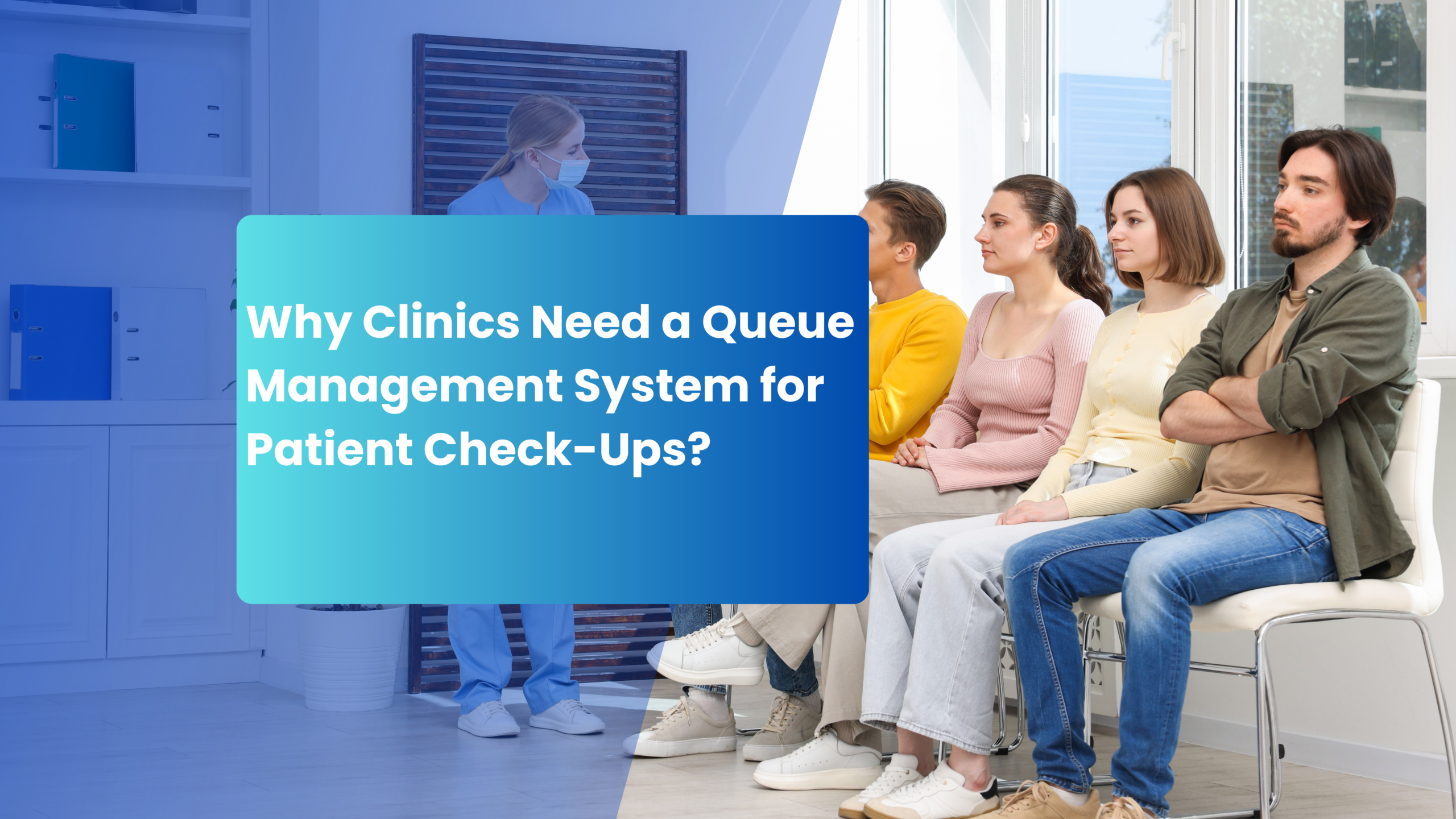
Patient check-ups are an essential part of healthcare services, but long waiting lines in clinics can negatively affect patient experience and clinic efficiency. Without proper queue management, clinics may struggle with overcrowded waiting areas, frustrated patients, and disorganized service flow. A queue management system helps clinics organize patient visits, reduce waiting times, and improve the overall quality of healthcare service.
Reduce Patient Waiting Time.
One of the main benefits of a queue management system is reducing patient waiting time. Instead of patients standing in long lines, the system assigns queue numbers and manages the order of service. Patients can sit comfortably in the waiting area until their number is called, making the experience more organized and less stressful.
Improve Patient Experience.
Patients expect healthcare services to be efficient and well organized. Long waits can lead to dissatisfaction and negative impressions of the clinic. A digital queue system creates a more structured environment where patients clearly understand when their turn will arrive. This transparency improves patient confidence in the clinic’s service.
Manage Walk-In and Appointment Patients Efficiently.
Many clinics handle both scheduled appointments and walk-in patients. Without a proper system, it can be difficult to balance these two groups.
A queue management system can create separate queues for:
Scheduled appointments
Walk-in consultations
Follow-up visits
This ensures fair and efficient service for all patients.
Reduce Crowding in Waiting Areas.
Overcrowded waiting rooms can create discomfort for patients and increase stress for clinic staff. Queue systems help control patient flow by organizing arrivals and directing patients to the appropriate service area. Some systems also allow virtual queues or SMS notifications, so patients do not need to wait in crowded spaces.
Improve Staff Efficiency.
When queues are not managed properly, staff members often spend extra time organizing patients instead of focusing on medical services. A queue management system automates patient flow, allowing clinic staff to focus more on patient care rather than managing lines.
Provide Data for Better Clinic Management.
Modern queue systems provide valuable data such as:
Average waiting times
Peak clinic hours
Service time per patient
Staff performance metrics
This information helps clinic managers improve scheduling, staffing, and service efficiency.
Support Digital Healthcare Transformation.
Healthcare facilities are increasingly adopting digital tools to improve services. A queue management system is an important part of this transformation, helping clinics modernize their operations while providing a better patient experience.
Conclusion
A queue management system is an important tool for clinics that want to improve patient flow and service efficiency. By reducing waiting times, organizing patient visits, and improving staff productivity, clinics can deliver faster and more reliable healthcare services. Implementing a modern queue management solution helps clinics create a more comfortable environment for patients while ensuring smooth and efficient daily operations.
Related Articles
Fixing Overcrowded Dental Clinics with Smart Queue Technology. Dental clinics often experience a steady flow of patients throughout the day, from routine …

Why Telecommunications Service Centers Need Queue Management Systems. Telecommunications service centers assist customers with a wide range of needs, including SIM registration, …