
How Government Offices Can Serve More People Without Delays. Government offices provide essential services such as ID processing, permits, licensing, registrations, and …
Why Do Hospitals Need a Digital Queue Management System?
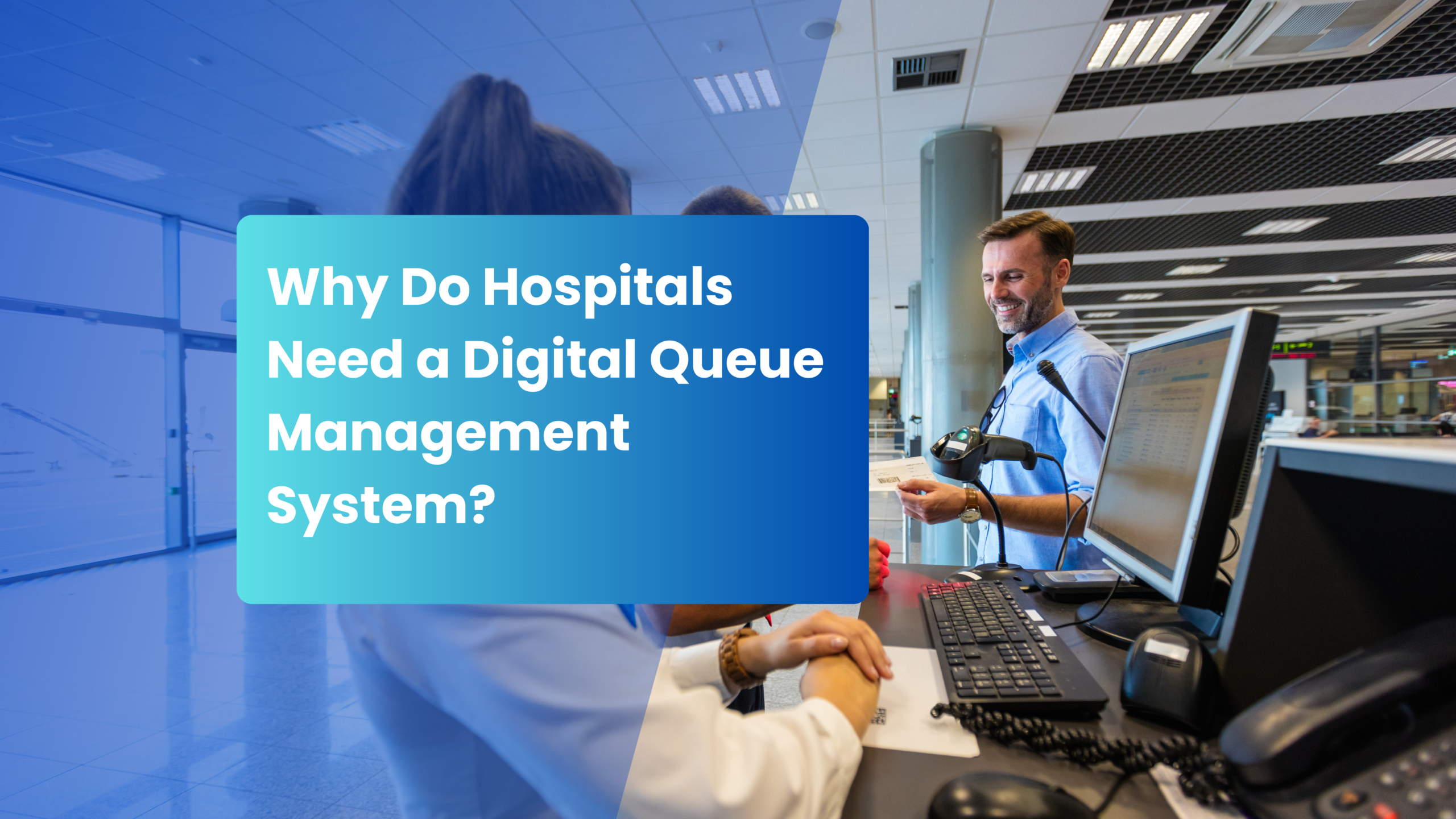
Hospitals are among the most complex service environments. Every day, they handle emergency cases, outpatient consultations, laboratory tests, pharmacy pickups, billing transactions, and follow-up visits all happening simultaneously. Without a structured system, patient flow quickly becomes chaotic.
That’s why modern healthcare institutions such as Mayo Clinic, Cleveland Clinic, and St. Luke’s Medical Center rely on digital solutions to manage patient movement efficiently.
1. To Reduce Long Waiting Times.
Manual queue systems often lead to:
Overcrowded reception areas
Confusion about service order
Delays in consultations
A digital QMS organizes patients through structured ticketing, service categorization, and automated routing.
Result: Faster and more predictable patient flow.
2. To Improve Patient Experience.
In healthcare settings, waiting can increase anxiety. A digital queue system provides:
Real-time wait time estimates
Clear service directions
Transparent priority handling
When patients know what to expect, stress levels decrease significantly.
Result: Higher patient satisfaction and trust.
3. To Enable Priority-Based Care.
Hospitals must treat patients based on urgency, not arrival time. A digital QMS supports:
Triage-level prioritization
Emergency fast-tracking
Special lanes for seniors or high-risk patients
Result: Critical cases receive immediate attention without disrupting overall operations.
4. To Enhance Operational Visibility.
Hospital administrators need live data to manage resources effectively. A digital system provides:
Current patient volume
Department congestion levels
Average service time per unit
This allows managers to reassign staff or open additional counters instantly.
Result: Proactive problem-solving instead of reactive crisis management.
5. To Improve Staff Productivity.
Without structured queues, staff may face:
Uneven workload distribution
Repeated manual coordination
Increased stress
A digital QMS balances assignments and tracks performance metrics.
Result: Better efficiency and reduced staff burnout.
6. To Integrate with Modern Healthcare Systems.
Digital queue systems can connect with:
Electronic Medical Records (EMR)
Appointment scheduling platforms
Billing and payment systems
This creates a seamless transition from registration to discharge.
Result: Reduced administrative delays and improved accuracy.
7. To Improve Safety and Infection Control.
Crowded waiting areas increase health risks. A digital system:
Minimizes physical lines
Allows remote check-in
Distributes patients evenly
Result: Safer hospital environments, especially during high patient volume periods
Conclusion
Hospitals need a Digital Queue Management System to maintain order, improve efficiency, and enhance patient-centered care. By reducing waiting times, enabling smart prioritization, providing real-time visibility, and integrating with digital health systems, hospitals can transform patient flow into a structured and efficient process.
Related Articles
Fixing Overcrowded Dental Clinics with Smart Queue Technology. Dental clinics often experience a steady flow of patients throughout the day, from routine …

Why Telecommunications Service Centers Need Queue Management Systems. Telecommunications service centers assist customers with a wide range of needs, including SIM registration, …